Trade Show Timelines and Their Ripple Effects on Strip Retail and Entertainment Venues
Written by Uma Hartmann · Oct 21, 2026
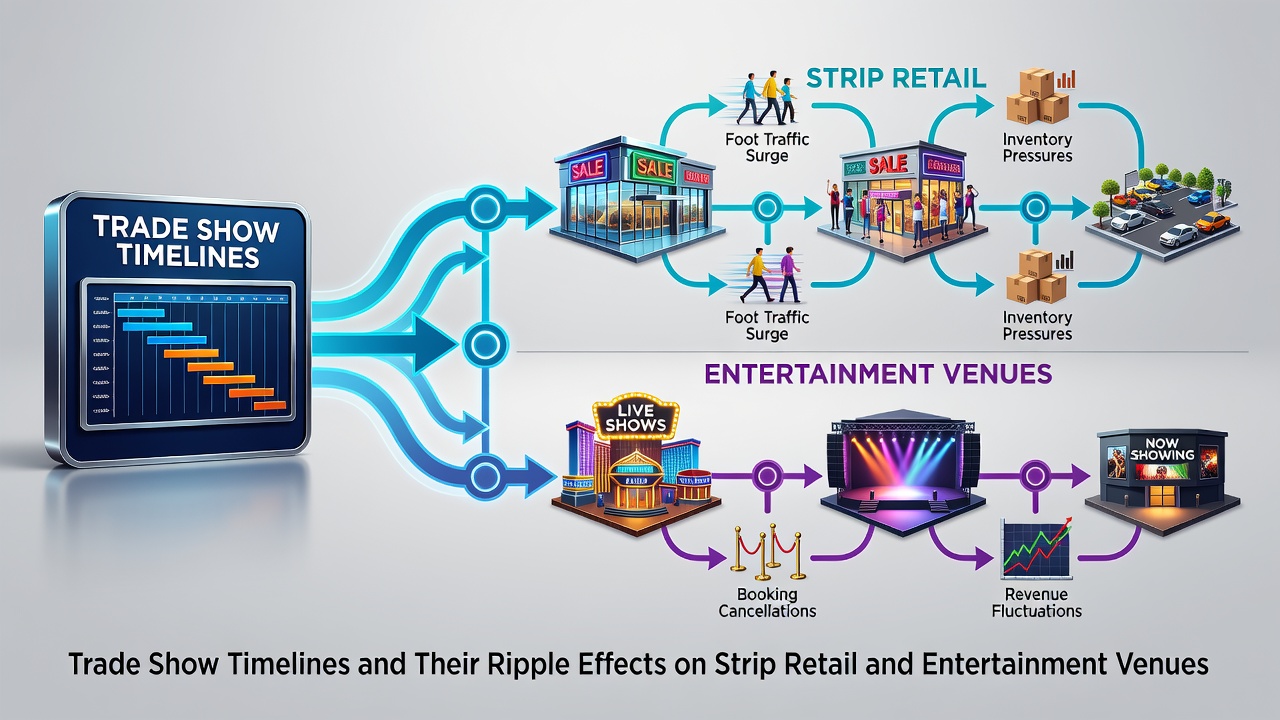
Trade Show Timelines and Their Ripple Effects on Strip Retail and Entertainment Venues
Trade shows shape the operational rhythms of Las Vegas Strip retail corridors and entertainment venues through predictable yet complex timelines that stretch across months of preparation and execution. Major events such as CES in January and the World of Concrete in late January create concentrated visitor surges that alter inventory cycles for nearby boutiques and force entertainment producers to adjust performance schedules around peak attendance windows. Data from the Las Vegas Convention and Visitors Authority shows these gatherings generate measurable shifts in foot traffic patterns that extend beyond convention halls into adjacent shopping districts and theater districts.
Timeline Patterns Across the Calendar Year
Convention Center bookings follow a recurring sequence where early-year technology and construction expos give way to spring automotive and design events before summer slows into fall gatherings focused on hospitality and gaming equipment. Observers note that October often hosts overlapping mid-sized shows that draw regional buyers whose spending habits differ from the international crowds of January events. In October 2026 the calendar lists several concurrent exhibitions that align with seasonal retail promotions and pre-holiday entertainment lineups, creating layered demand on staffing and supply deliveries.
Retail operators along the Strip receive advance notice of these dates through coordinated alerts from venue management groups, allowing them to recalibrate stock levels for high-margin items like electronics accessories and apparel that appeal to convention attendees. Entertainment venues use the same advance schedules to negotiate artist contracts and stage crew availability, since overlapping show dates can strain shared resources such as lighting equipment and transportation fleets.
Retail Corridor Adjustments
Strip retail outlets experience direct inventory turnover spikes when trade show timelines overlap with weekend peaks, prompting managers to increase deliveries of specialty goods while reducing slower-moving seasonal stock. Figures from industry reports indicate that boutiques located within a two-block radius of major convention facilities see average daily transaction volumes rise by double-digit percentages during the first three days of large expos. Those retailers coordinate with vendors through just-in-time logistics that rely on service tunnels and loading docks shared with neighboring resorts.
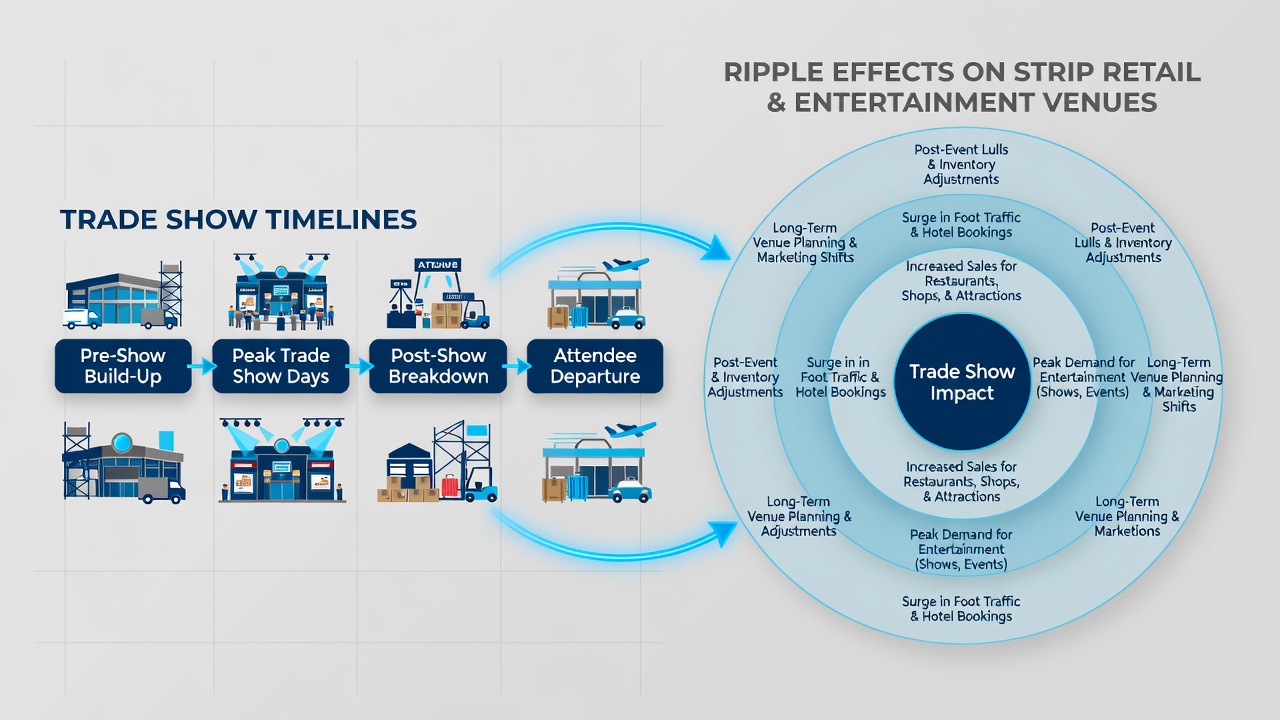
Extended hours become standard during these periods, with some stores opening earlier to capture breakfast crowds heading to convention sessions and staying open later for evening networking events. This schedule compression affects staffing models, as stores pull from a shared labor pool that also supports entertainment venues during the same weeks. Research published by the International Association of Exhibitions and Events highlights how these synchronized timelines encourage cross-promotions between retailers and nearby show producers, including bundled ticket and shopping packages that appear in attendee registration materials.
Entertainment Venue Scheduling Shifts
Theater and arena operators on the Strip align production calendars with trade show arrivals to maximize attendance at residencies and touring productions. Large expos bring corporate groups that book blocks of seats for incentive outings, which in turn influences which acts receive prime evening slots versus matinee performances. Crews responsible for set changes and sound checks must work around daytime convention programming that occupies adjacent ballrooms and meeting spaces, creating tight turnaround windows that test logistical coordination.
October timelines in particular intersect with holiday preview events at entertainment venues, where producers test new material before larger winter audiences arrive. Those overlaps require careful acoustic and crowd-flow planning so that attendees moving between convention sessions and evening shows do not create bottlenecks at shared entrances and escalators. Venue managers track historical attendance data to forecast staffing needs for security and hospitality teams that serve both trade show participants and regular ticket holders.
Supply Chain and Staffing Ripple Effects
Trade show calendars drive upstream changes in produce deliveries, floral arrangements, and technical equipment rentals that support both retail displays and stage productions. Vendors adjust delivery routes to avoid peak pedestrian hours on sidewalks that double as attendee pathways between hotels and convention facilities. Staffing agencies report increased demand for temporary workers who possess dual experience in retail sales and event hospitality, allowing the same personnel to rotate between boutique shifts and theater support roles.
These coordinated demands extend to transportation networks, where shuttle schedules between the airport, convention sites, and Strip properties receive temporary route modifications documented in public planning notices. Observers tracking multi-year patterns note that venues located at the northern and southern ends of the Strip experience staggered impacts depending on which convention hall hosts the largest events each season.
Conclusion
Trade show timelines function as recurring anchors that synchronize retail restocking cycles, entertainment booking windows, and shared operational resources across the Strip. The resulting adjustments in inventory, staffing, and performance scheduling demonstrate how convention calendars translate into measurable operational changes for adjacent businesses. Continued tracking of these patterns provides venue managers and retailers with the data needed to anticipate future overlaps and maintain service continuity throughout each calendar year.