Private Aircraft Arrivals at Henderson Executive Airport Shift High-Value Visitors Toward Exclusive Vegas Experiences
Written by Noah Roth · Nov 5, 2026
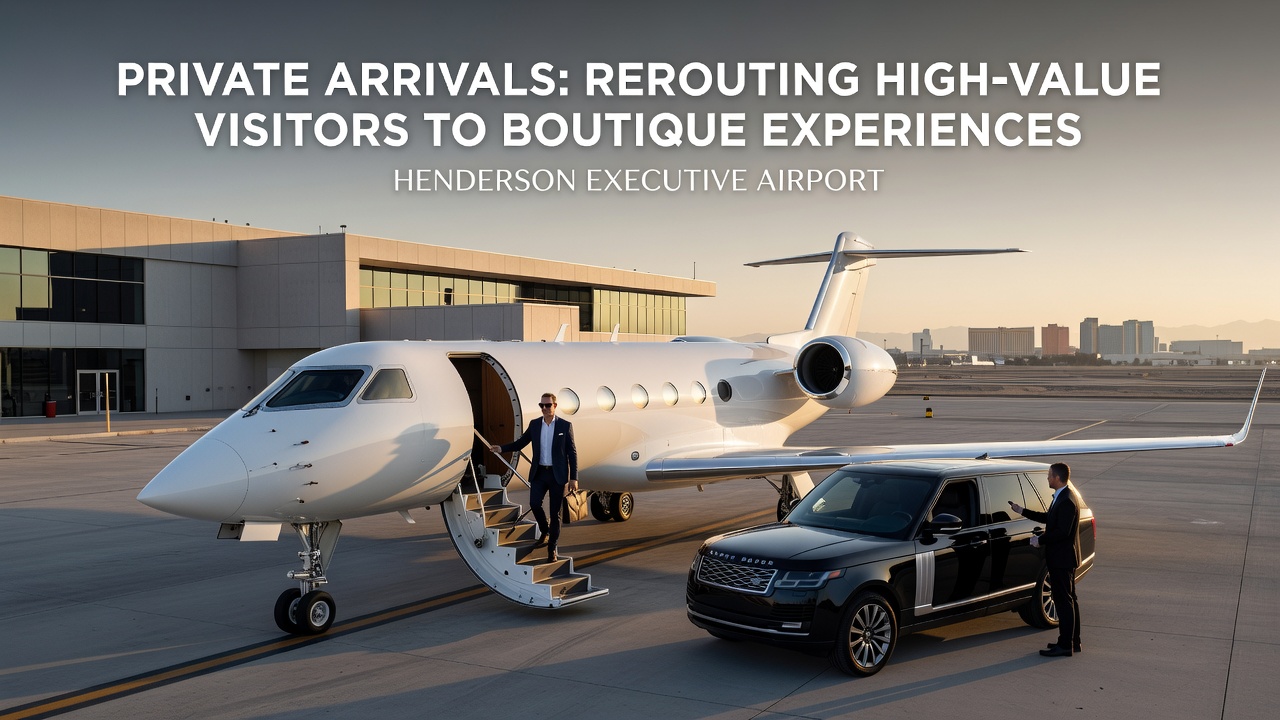
Private Aircraft Arrivals at Henderson Executive Airport Shift High-Value Visitors Toward Exclusive Vegas Experiences
Private aviation operations at Henderson Executive Airport have expanded steadily as corporate and leisure travelers seek alternatives to the main commercial facilities at Harry Reid International Airport, and observers note that these arrivals allow direct connections to venues located away from the primary Strip corridors. The airport, situated in Henderson roughly 10 miles southeast of the Las Vegas Strip, functions as a designated reliever facility under Federal Aviation Administration guidelines, handling general aviation and business jet traffic that would otherwise add to congestion at the larger hub.
Operational Details at Henderson Executive Airport
Runway configurations and fixed-base operators at Henderson Executive Airport support a range of aircraft sizes, from light jets to larger cabin models, while ground handling teams coordinate rapid deplaning and transfer to ground transportation that bypasses the heavy vehicle volumes on Interstate 15 and Las Vegas Boulevard. Data from airport records indicate thousands of annual operations dedicated to non-commercial flights, with peak periods occurring during major conventions and holiday windows such as November 2026 when corporate events draw additional private aircraft movements. Those who monitor flight patterns report that arrivals often occur during midday and early evening slots, enabling passengers to reach destinations in the surrounding valleys before peak commuter flows intensify.
Ground Transfers and Route Adjustments
Transportation providers based near Henderson Executive Airport maintain fleets of sedans, SUVs, and vans that route passengers along surface streets or secondary highways toward properties in Summerlin, Lake Las Vegas, and downtown districts rather than funneling them directly onto Strip access roads. This routing reduces exposure to the dense traffic patterns that characterize the central resort corridor during evening hours, and logistics firms document shorter transfer times when vehicles avoid the main arteries. Industry reports from the National Business Aviation Association highlight similar patterns at reliever airports across the United States, where dedicated aviation facilities channel high-value visitors into localized experiences that emphasize privacy and customized itineraries over high-volume entertainment districts.
Boutique Venues and Alternative Destinations
Many arrivals connect to boutique hotels, private clubs, and specialized dining establishments situated in master-planned communities outside the Strip core, where operators offer tailored packages that include golf access at courses in the western valleys, art gallery tours in the arts district, or private tastings at facilities near Lake Mead. These options draw from the same visitor pool that once concentrated along the central corridor, yet the dispersal spreads demand across a broader geographic footprint and supports smaller-scale hospitality providers. Research compiled by the Las Vegas Convention and Visitors Authority shows incremental growth in off-Strip bookings tied to private aviation arrivals, with figures revealing consistent percentages of business travelers selecting properties that emphasize limited guest counts and personalized service.
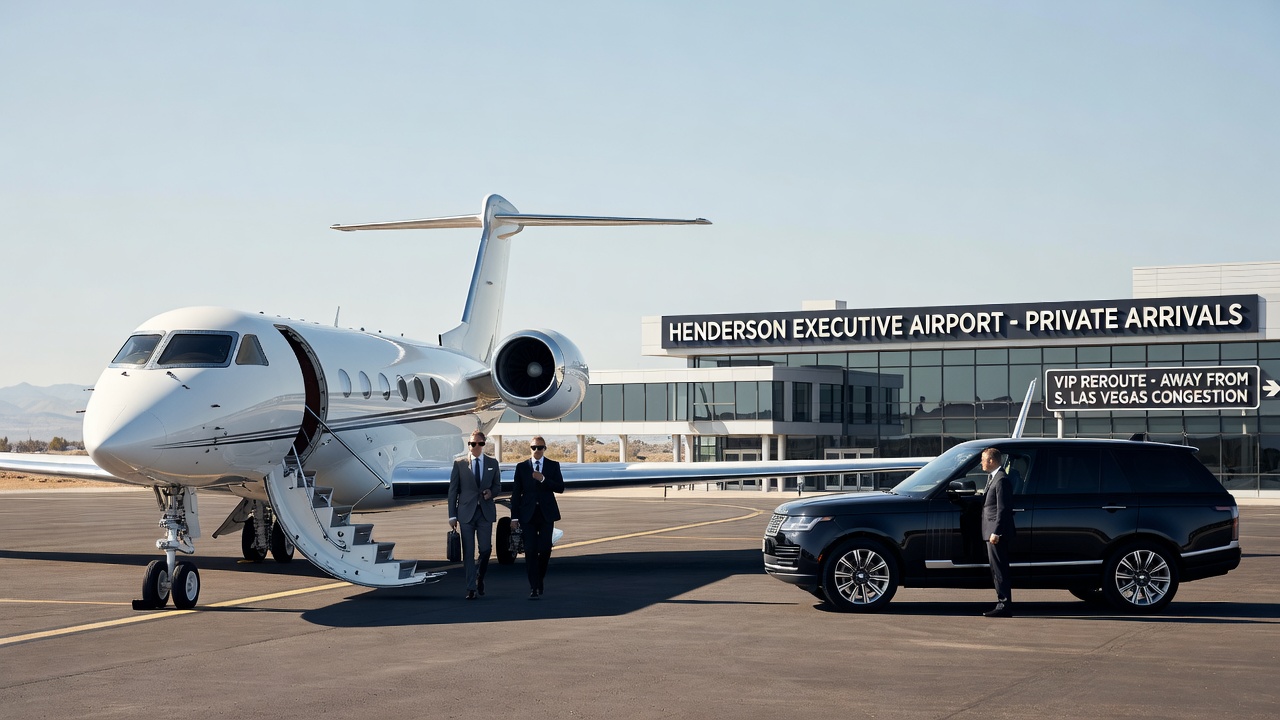
Service providers have adapted by positioning concierge teams at the airport's terminal facilities, where staff arrange immediate transfers to vineyards in the Pahrump region or wellness retreats in the foothills, and coordination between aviation handlers and ground operators ensures luggage and equipment move in parallel with passenger vehicles. Such arrangements appear in case studies from comparable facilities, including operations documented by Transport Canada at secondary airports serving Toronto's business aviation sector, where similar rerouting supports dispersed tourism patterns.
Logistics Coordination and Seasonal Patterns
Fixed-base operators maintain partnerships with local event planners and hospitality groups to align arrival schedules with availability at exclusive venues, and scheduling software integrates real-time traffic data to select optimal departure routes from the airfield. During November periods, when corporate conferences and holiday travel overlap, the volume of private movements increases, prompting ground teams to pre-position resources and adjust staffing levels. Observers who track these flows note that the separation from commercial passenger surges at Harry Reid International allows Henderson arrivals to maintain tighter timelines and access properties that impose capacity limits or membership requirements.
Equipment staging areas and customs processing points at the airport facilitate international private flights as well, directing those passengers toward specialized experiences such as private aviation museums or high-end retail showrooms in the suburban commercial zones. Coordination protocols documented in FAA operational manuals emphasize efficient turnaround procedures that keep aircraft on the ground for minimal durations while passengers proceed to their chosen locations.
Conclusion
Private aircraft activity at Henderson Executive Airport continues to influence visitor distribution across the Las Vegas region by providing an entry point that supports direct connections to boutique venues and reduces reliance on the primary Strip transportation grid. Airport statistics, industry association data, and ground service records together illustrate how these operations integrate with broader hospitality networks that extend into surrounding communities and specialized facilities. As seasonal peaks such as November 2026 approach, the established patterns suggest sustained use of the reliever airport for travelers prioritizing access to exclusive, lower-density experiences throughout the valley.